



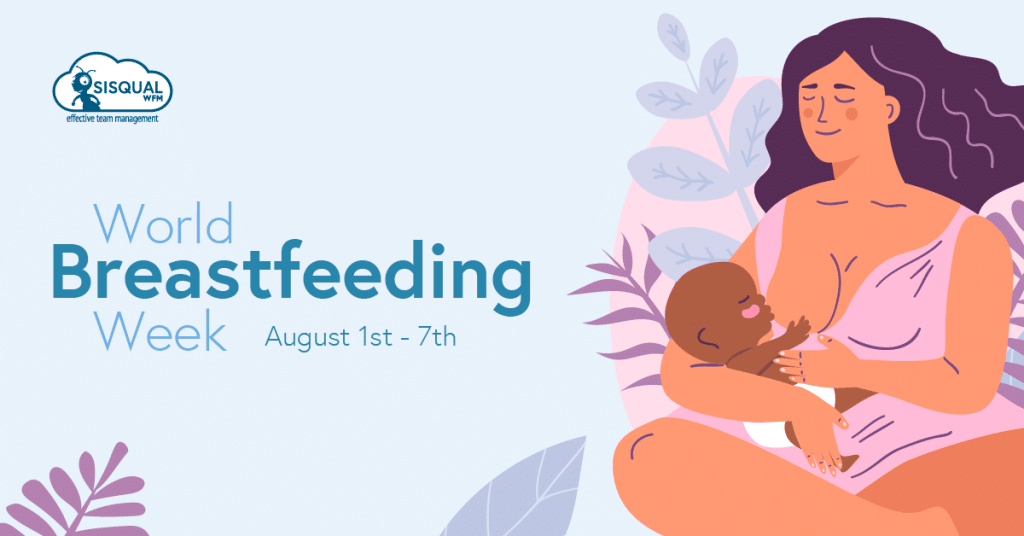
From 1 to 7 August, World Breastfeeding Week (WBW) is celebrated, a global campaign supported by the World Health Organisation (WHO), UNICEF, and civil society organisations in more than 170 countries. This movement, which began with the 1990 ‘Innocenti Declaration’, aims to reinforce the importance of breastfeeding for the health of babies and mothers, as well as highlighting the need for more effective support systems. This year, the campaign will focus on environmental and social sustainability, recognising breastfeeding as an essential practice not only for public health, but also for the planet.
Reconciling Breastfeeding and Work
Despite the proven benefits of breastfeeding, mothers’ return to work remains one of the biggest obstacles to its continuation. The lack of adequate paid leave, absence of breastfeeding breaks and inflexible work environments lead many women to stop breastfeeding early, often before six months, or even earlier than they would like. Although laws promoting breastfeeding exist, they usually only cover the first six months of a baby’s life, whereas WHO recommends breastfeeding until two years of age or beyond.
The question remains: how can breastfeeding and a professional life be reconciled?
Lack of incentive policies
Some countries have taken steps to protect and promote breastfeeding when women return to work.
In Portugal, for example, mothers are entitled to two daily breaks of up to one hour each for breastfeeding until their baby is one year old, and are also exempt from night work, overtime and concentrated working hours.
However, several amendments to the legislation are currently under discussion, which would remove the requirement for at least 30 minutes per day for breastfeeding for part-time working mothers and make it mandatory to submit a medical certificate to the employer every six months to prove breastfeeding/lactation.
Recently, several Brazilian states have also passed incentive laws guaranteeing the right to breastfeed in public and private places, as well as reinforcing the role of companies in creating adequate and safe spaces for breastfeeding or expressing milk.
These measures are essential, but they still need to be accompanied by a change in organisational culture: breastfeeding should be seen as a right and not an obstacle to productivity.
To truly support mothers, companies need to promote flexible policies, such as extended parental leave, create spaces that support breastfeeding, and encourage the equitable sharing of family responsibilities.
How can technology help?
Digitalisation has brought new ways to promote inclusion in the labour market. Workforce Management (WFM) solutions enable intelligent workforce management, offering absolute flexibility for mothers returning to work. “More than 50% of the working population are women with children who would like to work fewer hours, but there are no flexible alternatives or even legislation to guarantee this flexibility. WFM makes this possible”, explained José Pedro Fernandes, Vice President of SISQUAL® WFM, during a Radio Observador podcast where he spoke about the current challenges of people management.
Through modalities such as “Open Shifts”, schedules are made available to employees, allowing them to choose shifts according to their availability. This option can be beneficial for mothers without a fixed contract or those with specific scheduling needs.
By allowing employees to choose their schedules more autonomously, companies promote a better work-life balance, increase well-being, and thus reduce early weaning.
Breastfeeding is undeniably a natural and vital practice, but to be sustainable, it needs to be accompanied by institutional, legal, and organisational support. Companies must therefore ensure viable options so that flexibility and innovation can go hand in hand, and above all, so that no mother has to choose between breastfeeding and her career.
Discover how WFM technology can transform the workplace and make it truly inclusive!
Book a demo here!