

Excellence in customer service is a key factor for success in the hotel industry. Therefore, with the growing demand for personalized, high-quality services, hotels today face the challenge of managing their workforce efficiently. That said, Workforce Management (WFM) tools have become a strategic ally, offering solutions to optimize operations, reduce costs and guarantee service quality. With a focus on operational efficiency, SISQUAL® WFM offers customizable solutions with the aim of optimizing hospitality, using advanced algorithms to predict needs and adjust work schedules according to the real needs of this sector.
How do WFM tools work?
1 – Optimizing Schedules and Shifts
One of the biggest challenges in hospitality is creating schedules that meet the needs of both business and employees. WFM tools, such as SISQUAL® WFM, use forecasting rules to create perfect schedules, automatically adjusting shifts according to needs. This means that hotels can ensure that the right number of employees with the right skills are available exactly when needed, avoiding both understaffing and overstaffing.
2 – Forecasting and adjusting for future needs
One of the main advantages of WFM tools is the ability to anticipate future needs through Forecast algorithms. Based on historical data, the solutions allow hotels to predict the appropriate number of employees at peak times, such as holidays or special events, preparing resources in advance.
3 – Management and Control of Operational Tasks
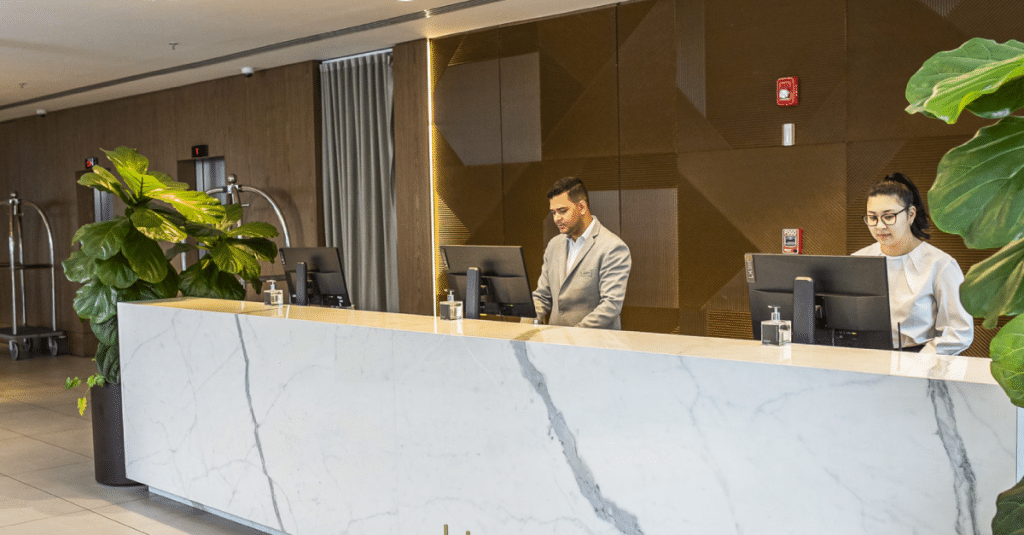
WFM solutions offer the possibility of monitoring operations in real time, allowing managers to track team performance and make immediate adjustments. If there is an unexpected increase in the check-ins rate, for example, managers can quickly reallocate resources to ensure that all guests are served efficiently.
The importance of automating tasks
Real Hotels Group, one of Portugal’s largest hotel groups, is an example of how adopting SISQUAL® WFM can transform hotel chain management. With more than 1,000 employees and 20 units across the country, the group has automated the entire schedule and points management process, providing greater efficiency. “The hotel sector operates 24 hours a day, 7 days a week and that being said “SISQUAL WFM has brought the possibility of monitoring our hotel operation and teams in real time”, explains Nádia Sousa, the group’s Human Resources Director.
After implementing SISQUAL® WFM, the group moved to a fully digital process, from scheduling to time tracking, and to the management of each employee’s working hours, allowing greater control of relevant information for processing salaries.
But what are the practical benefits of workforce management for the hospitality sector?
Increasing Service Quality
In hospitality, the ability to make quick decisions can be the difference between service quality and a frustrating customer experience. Adopting tools that optimize the daily management of teams allows you to know what resources are needed to guarantee service levels.
Improved Quality of Life for Employees
One of the main benefits of WFM tools is flexibility. By allowing employees to have greater control over their schedules and shifts, WFM contributes to improving quality of life, which translates into greater satisfaction and talent retention.
Legal Compliance and Cost Reduction
WFM tools help hotels ensure that all operations comply with labor legislation by automating the verification process and ensuring that each employee works in accordance with the applicable rules. In addition, by optimizing staff allocation, the tools help to reduce operating costs and avoid errors in payroll processing.
Workforce Management tools therefore represent an effective solution for the hospitality sector, making daily team management easier and simplifying operational management. By investing in WFM solutions, hotels can modernize their operations, reduce costs, improve employees’ quality of life and, above all, provide an excellent service.
Need to manage teams simply and effectively?
SISQUAL® WFM is a solution that can be adjusted to different market sectors, allowing you to better manage your workforce.